The name matters
Streptococcus equi subsp. zooepidemicus is distinct from Streptococcus equi subsp. equi, the usual cause of equine strangles. Ask for the exact laboratory identification.
 Global Chinchilla Alliance
CHINCHILLA HEALTH INFORMATION
Commonly called Strep zoo. Know the risks, recognize the signs and find reliable information for chinchilla care.
Updated September 22, 2026 · Educational information, not an individual diagnosis or treatment plan.
Call ahead and mention possible infectious exposure so the clinic can prepare. New swelling, reduced appetite or unusual lethargy also warrants prompt veterinary advice.
Strep zoo is a bacterium capable of causing serious disease in chinchillas and other animals. This resource brings together published evidence and GCA’s prevention efforts.
Published chinchilla infections and outbreaks are documented. The sources linked here do not establish the extent of a current nationwide chinchilla epidemic. This page does not identify any particular herd or seller as infected.
WHAT THE RESEARCH SHOWS
A 2020 research-colony report described abscesses, mild weight loss and respiratory disease. Six of 43 chinchillas tested positive by culture or PCR; some positive animals had no clinical signs. Those numbers describe that colony, not prevalence in pet chinchillas nationally.
A normal appearance does not rule out infection. A veterinarian must interpret signs, exposure history and appropriate testing together. Culture and PCR were used in the published investigation.
Read the 2020 chinchilla study.
Streptococcus equi subsp. zooepidemicus is distinct from Streptococcus equi subsp. equi, the usual cause of equine strangles. Ask for the exact laboratory identification.
Discuss sample collection, interpretation and follow-up with your veterinarian. The test result and an animal’s clinical condition answer different questions.
A SHARED HEALTH CONCERN
Published reports include horses, guinea pigs, dogs, cats and other species. The organism can occur in horses without illness, yet cause serious disease in other settings. Finding it in one species does not prove it has spread to every animal nearby.
Dog outbreaks can cause rapidly progressive respiratory disease. Cats can develop respiratory or neurological illness. Evidence from dogs or cats must not be treated as a chinchilla treatment protocol.
ABCD veterinary guidance on streptococcal infections · ASPCA shelter-medicine guidance.
Animal-to-human infection is documented, although human cases are uncommon. A study published by CDC examined serious human infections associated with horse contact. This establishes a zoonotic risk, not the likelihood of infection from any particular pet.
If you become unwell after contact with a suspected or confirmed infected animal, seek medical advice and mention the animal exposure and organism. Severe symptoms, including breathing difficulty, confusion or rapid deterioration, need urgent medical attention.
PRACTICAL NEXT STEPS
Respiratory secretions, close contact and contaminated equipment can spread the organism. Your veterinarian should tailor precautions to your species and facility. Clean and disinfect according to that plan and product instructions.
Transmission and outbreak precautions: ASPCA · CDC veterinary infection-prevention resources.
Medication choice, route and dosing must come from a veterinarian familiar with chinchillas. Do not use leftover antibiotics or attempt to drain an abscess yourself. A calendar-based quarantine alone is not proof that an animal is free of infection.
Keep a dated record of signs, appetite, weight changes, arrivals, animal contacts and laboratory results. Ask your veterinarian whether the laboratory can retain an isolate if further investigation is needed.
GCA PROGRAM UPDATE
GCA is taking initial steps toward exploring vaccine development for Strep zoo in chinchillas. This is early-stage work. GCA is not announcing an available vaccine, a proven protective effect or a release date.
We will share specific milestones, confirmed collaborators and supporting evidence as that work develops. Vaccine research does not replace veterinary care and infection-control measures now.
ASPCA’s current shelter guidance states that no vaccine is available for prevention of Strep zoo. Vaccines intended for other organisms or species should not be assumed to protect chinchillas.
Current ASPCA prevention guidance. GCA’s project update above is separate from the published scientific findings.
FROM THE CHINCHILLA CONNECTION ARCHIVE
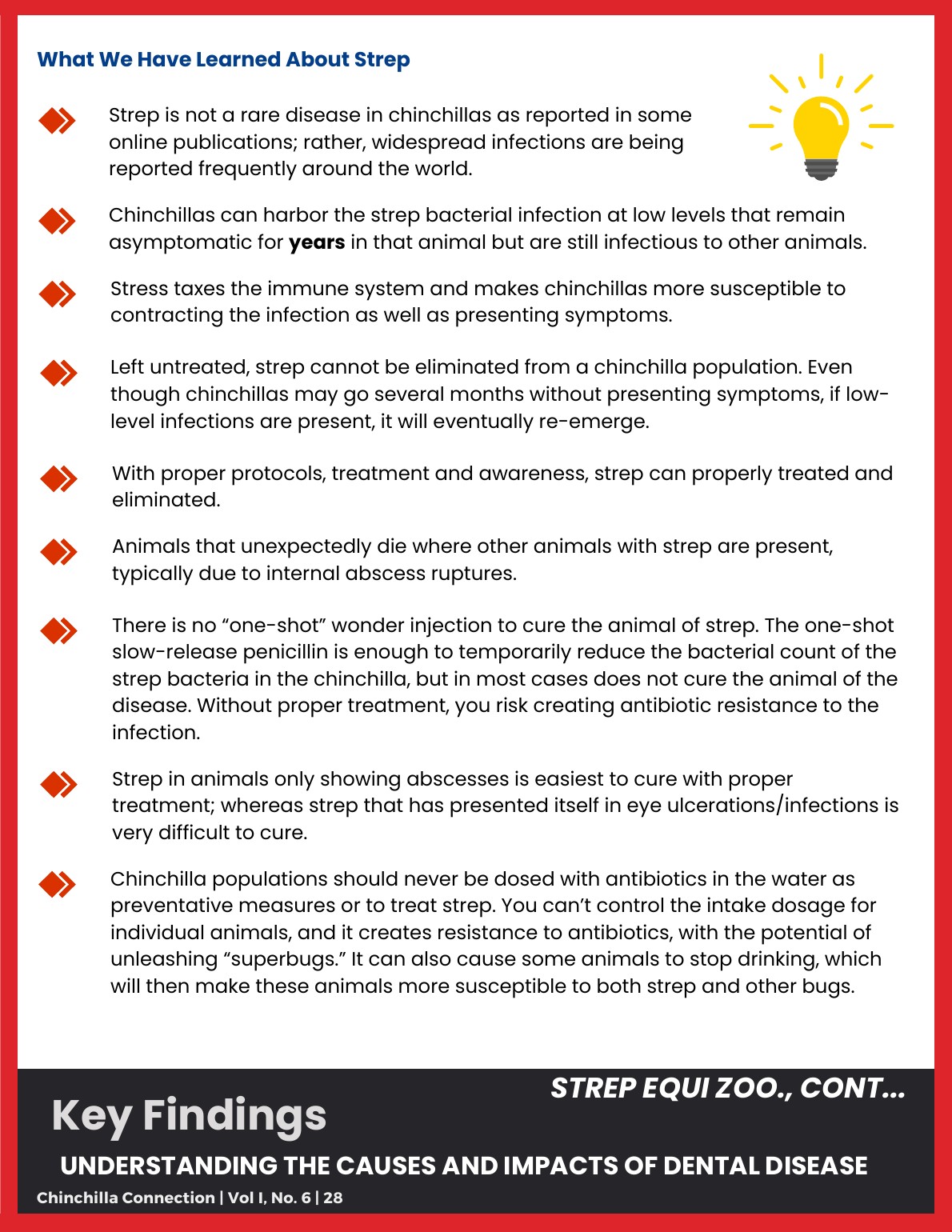
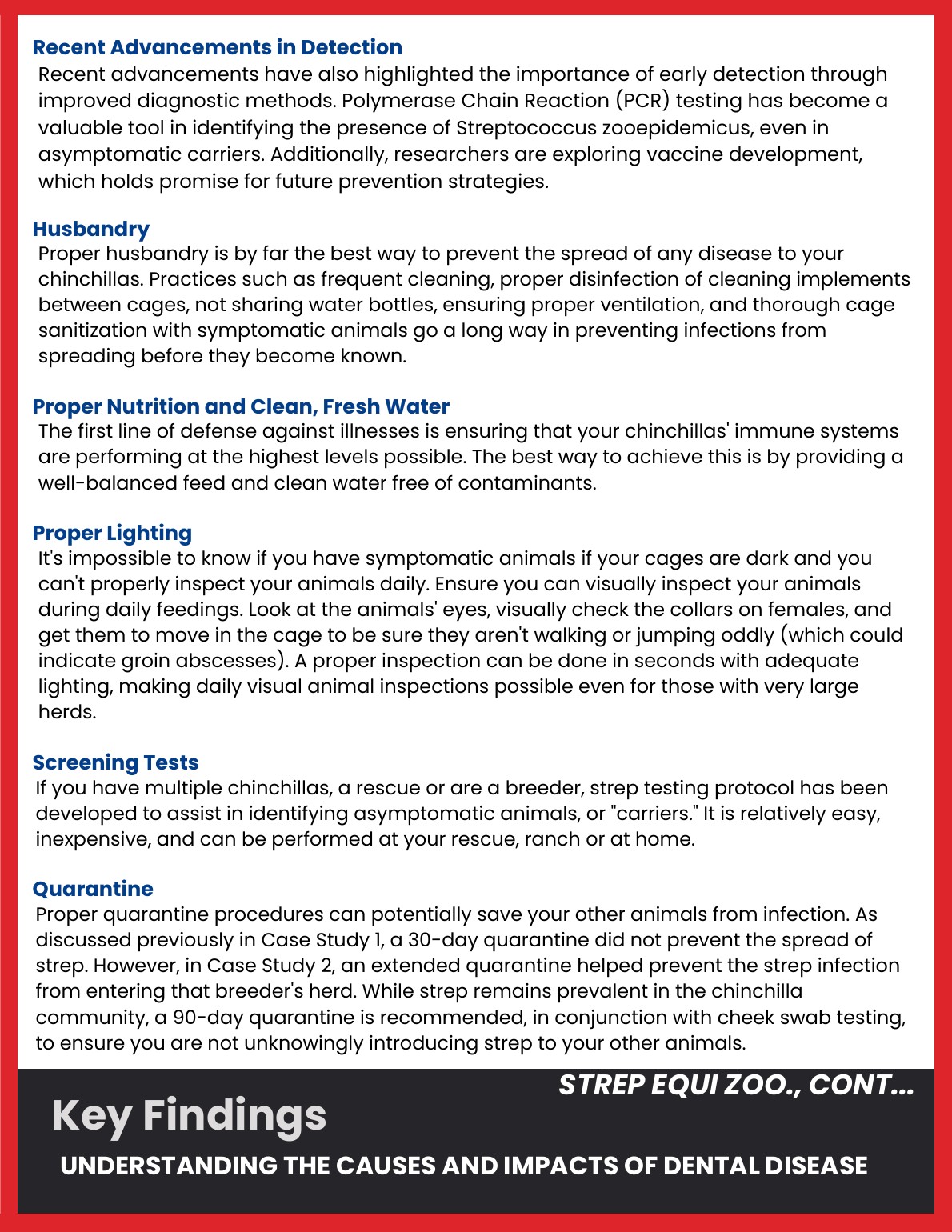
This conversation began long before the sanctuary website. GCA’s magazine covered Strep zoo in 2024 and returned to outbreak cleaning and biosecurity in 2025.
Read the complete original article pages below. These are dated magazine articles, preserved as published. Case observations and historical claims are not a measure of current national prevalence or a substitute for individualized veterinary advice.
Join Global Chinchilla Alliance for Chinchilla Connection, educational resources and a community working toward better chinchilla care. Bring your questions, experience and ideas to the mission.
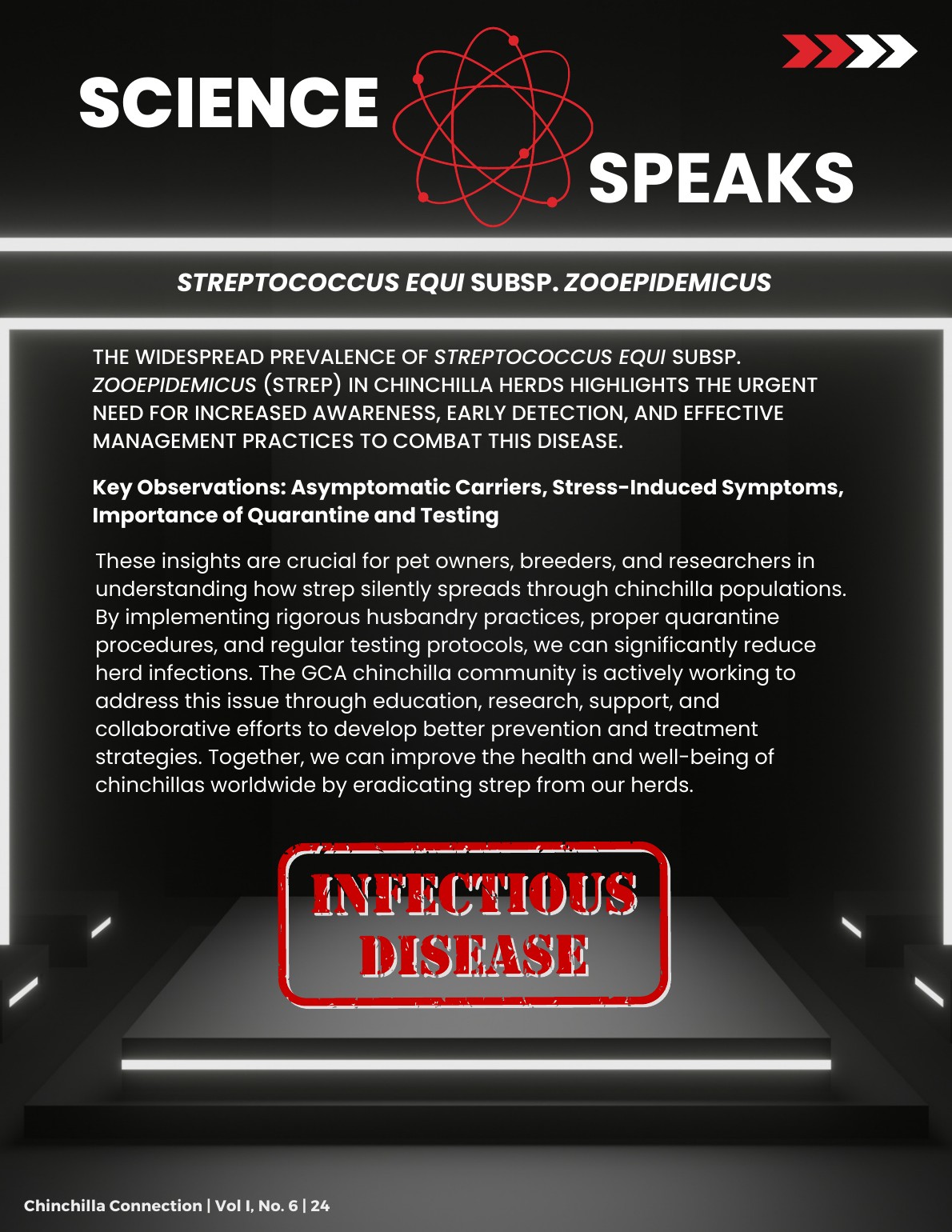
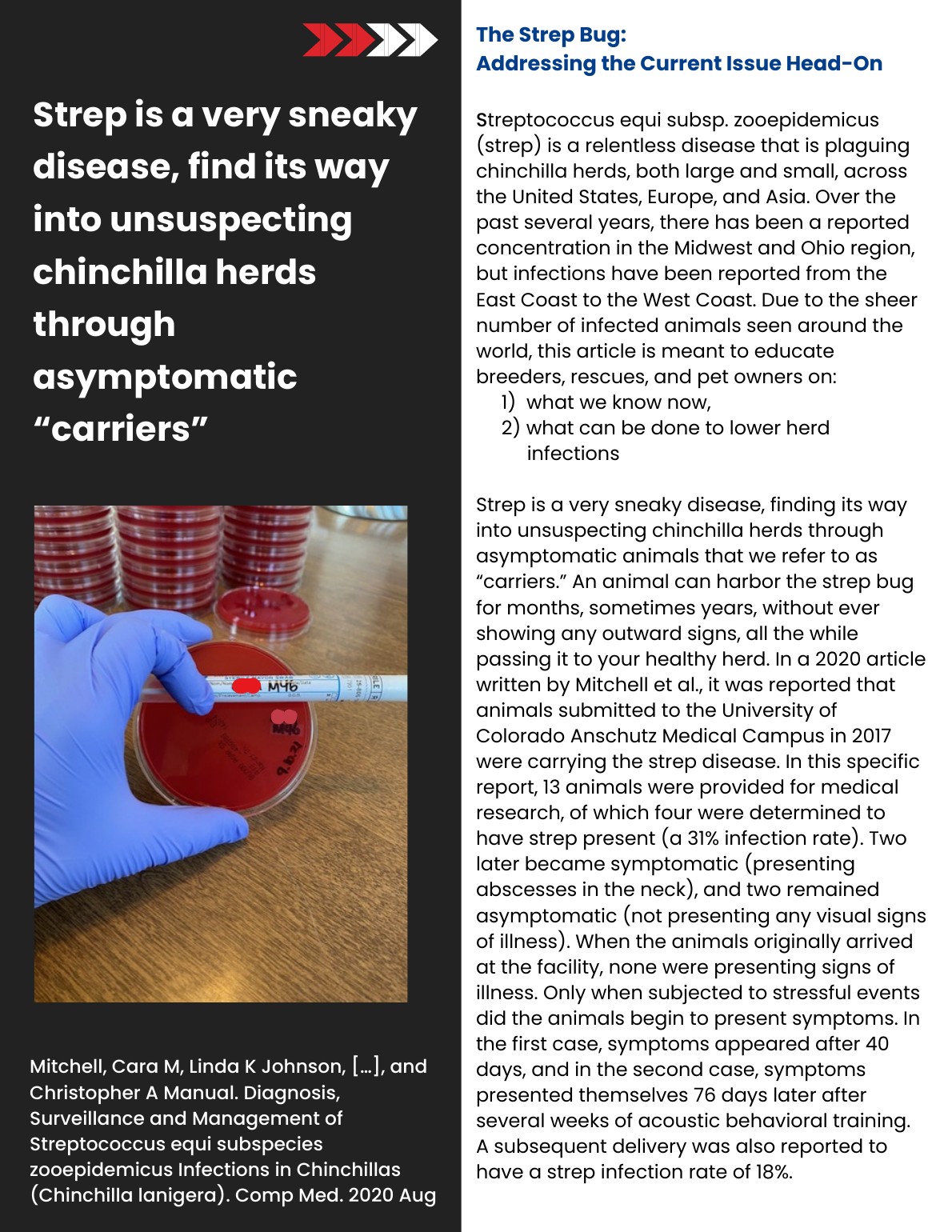
2024 · VOLUME 1, ISSUE 6 · PAGES 24–29
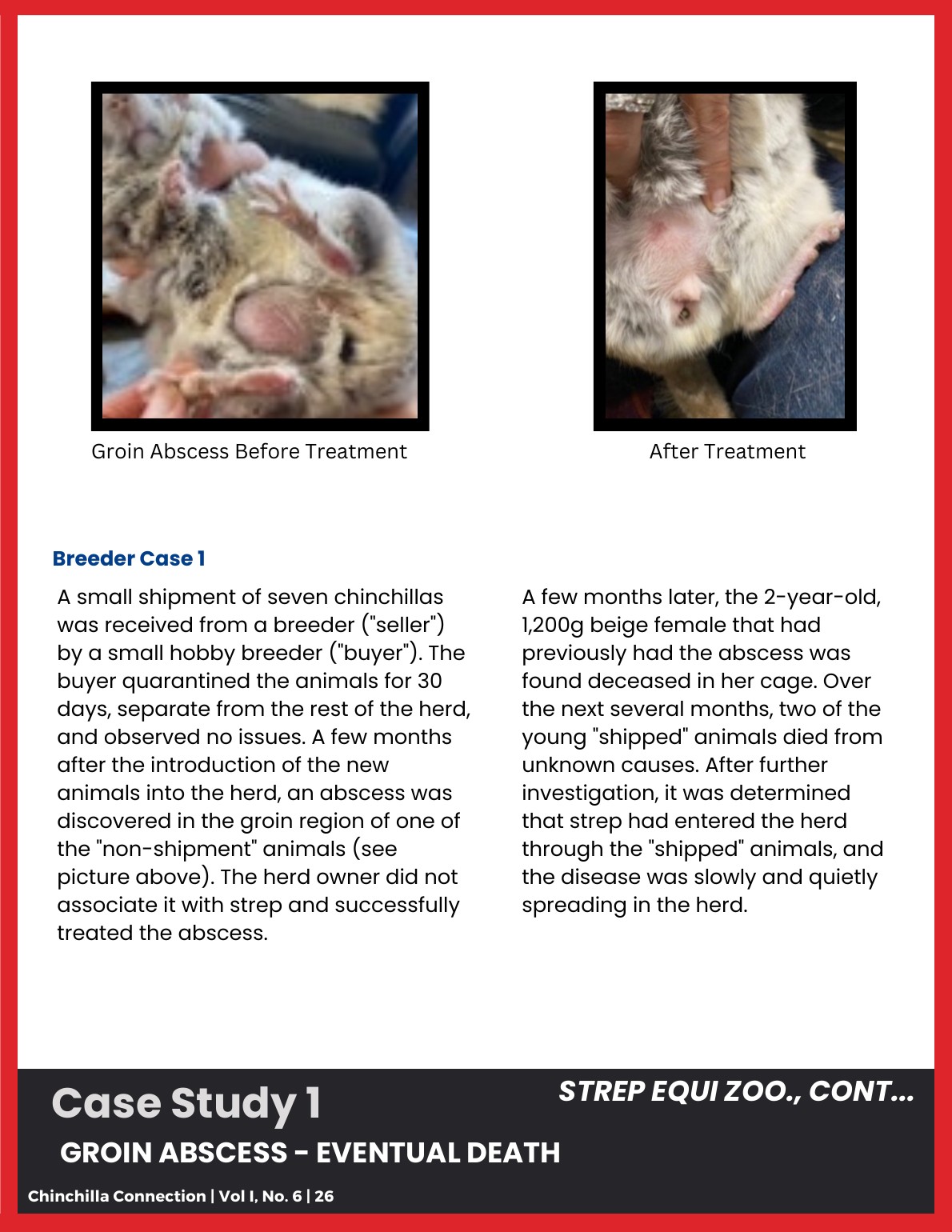
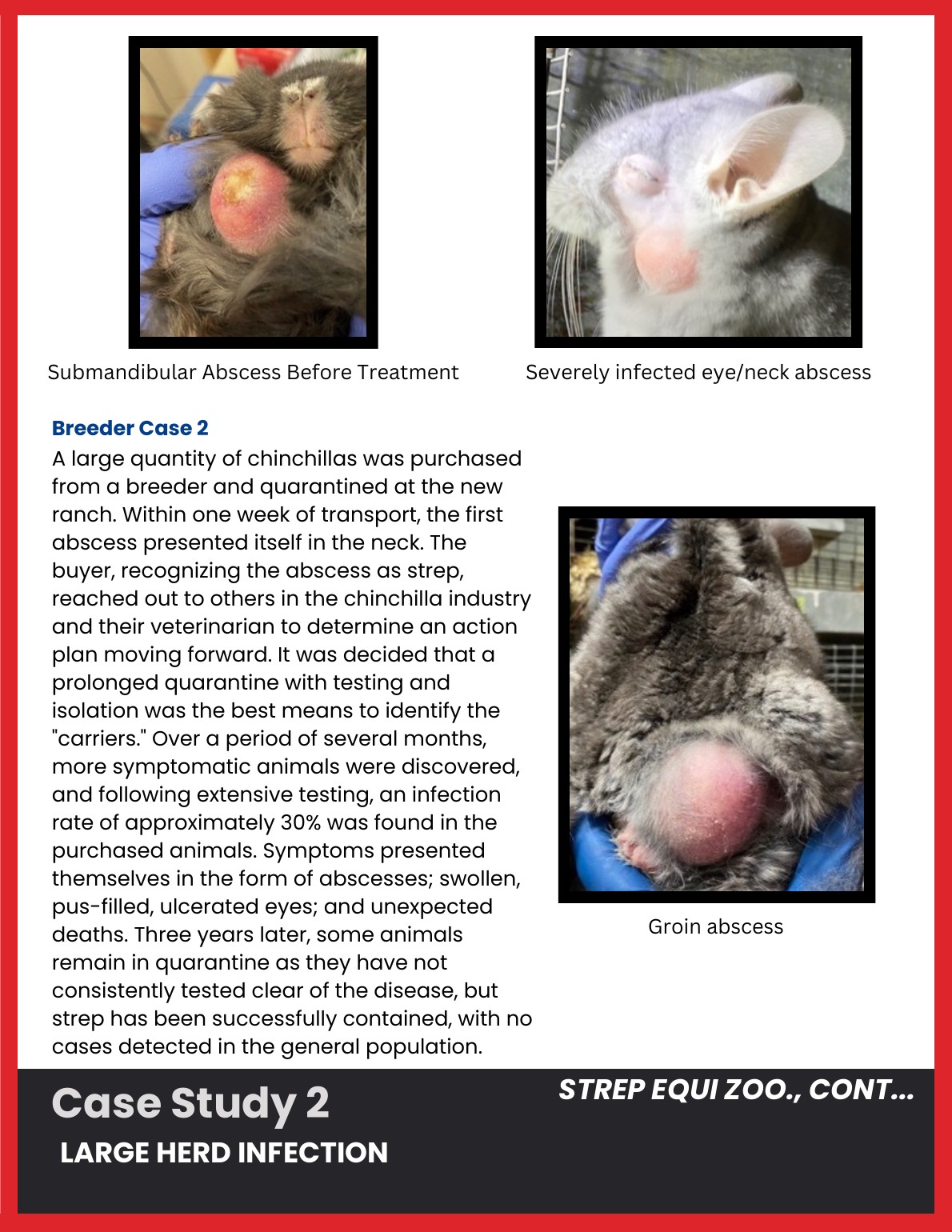
Complete six-page article from the supplied November 30, 2024 magazine file. It includes case observations, asymptomatic-carrier concerns, testing and husbandry discussion.
Published by Global Chinchilla Alliance. Issue editorial credits: Shahna Thomas Powell, Editor-in-Chief; Tabitha Lindsay, Managing Editor. No individual article byline is printed on these pages.
Some pages include clinical photographs of abscesses and eye disease.
Neither a fixed quarantine period nor a single negative test guarantees freedom from infection. Published colony findings and the magazine’s case accounts should not be generalized to all chinchillas. Treatment, testing and decisions about releasing animals from isolation belong with the attending veterinarian.
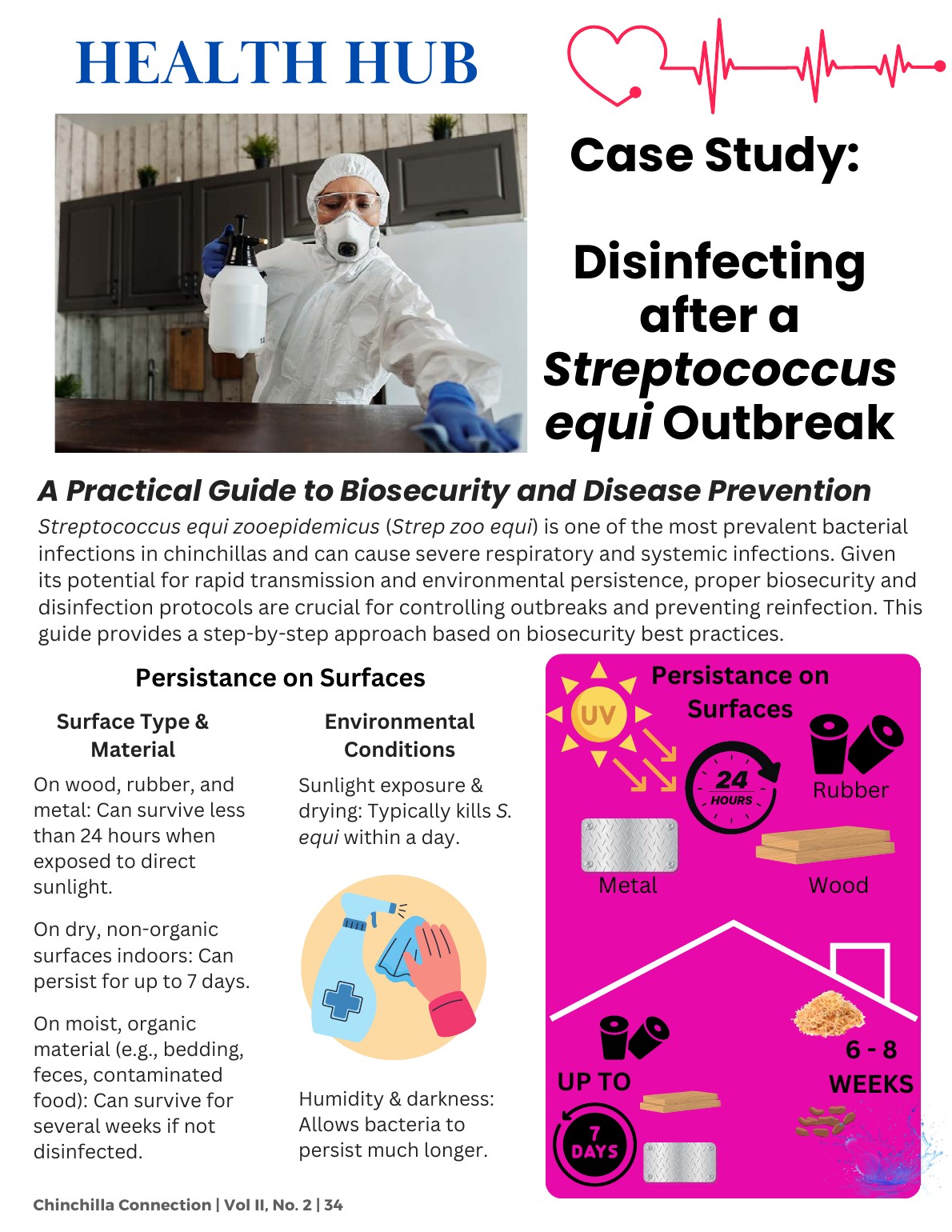
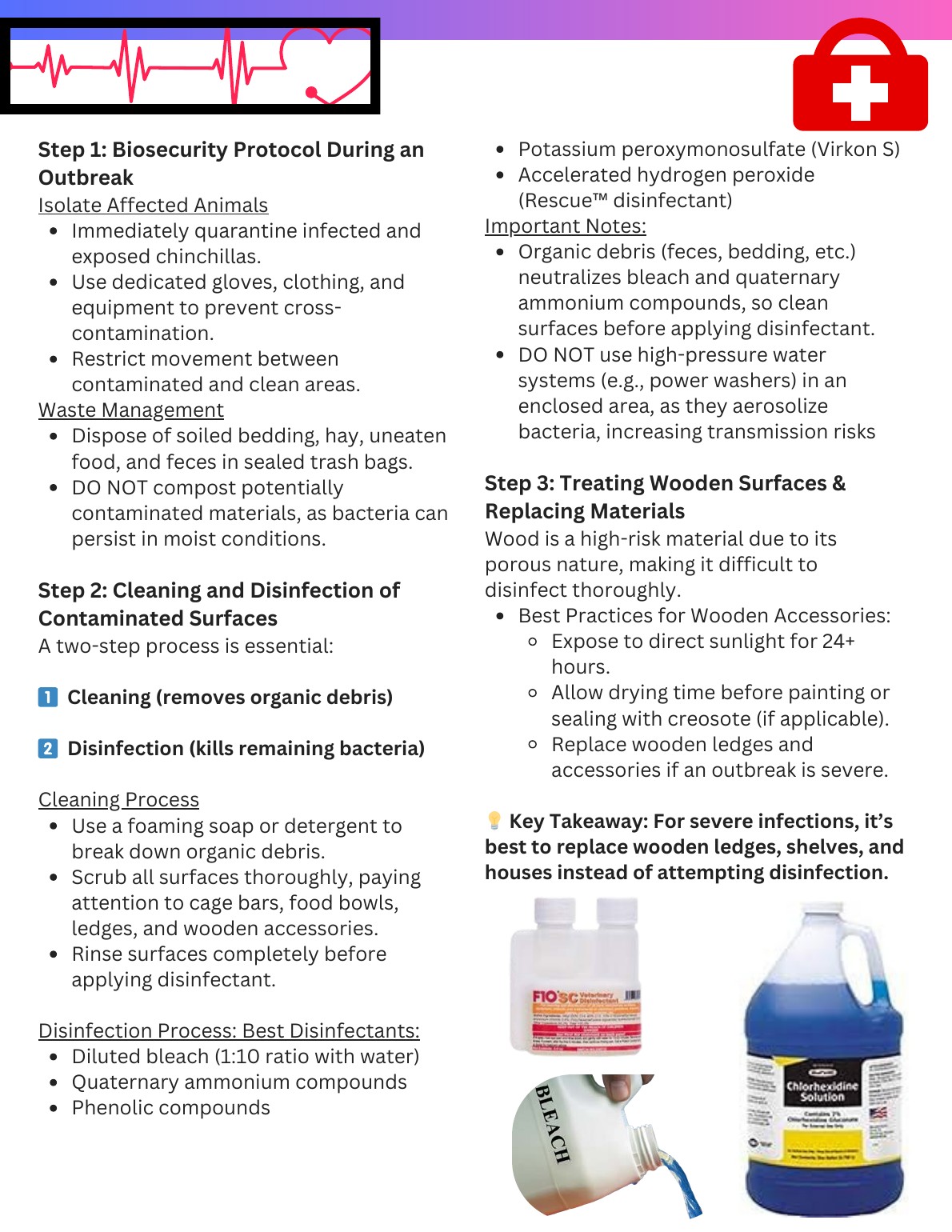
2025 · VOLUME 2, ISSUE 2 · PAGES 34–36
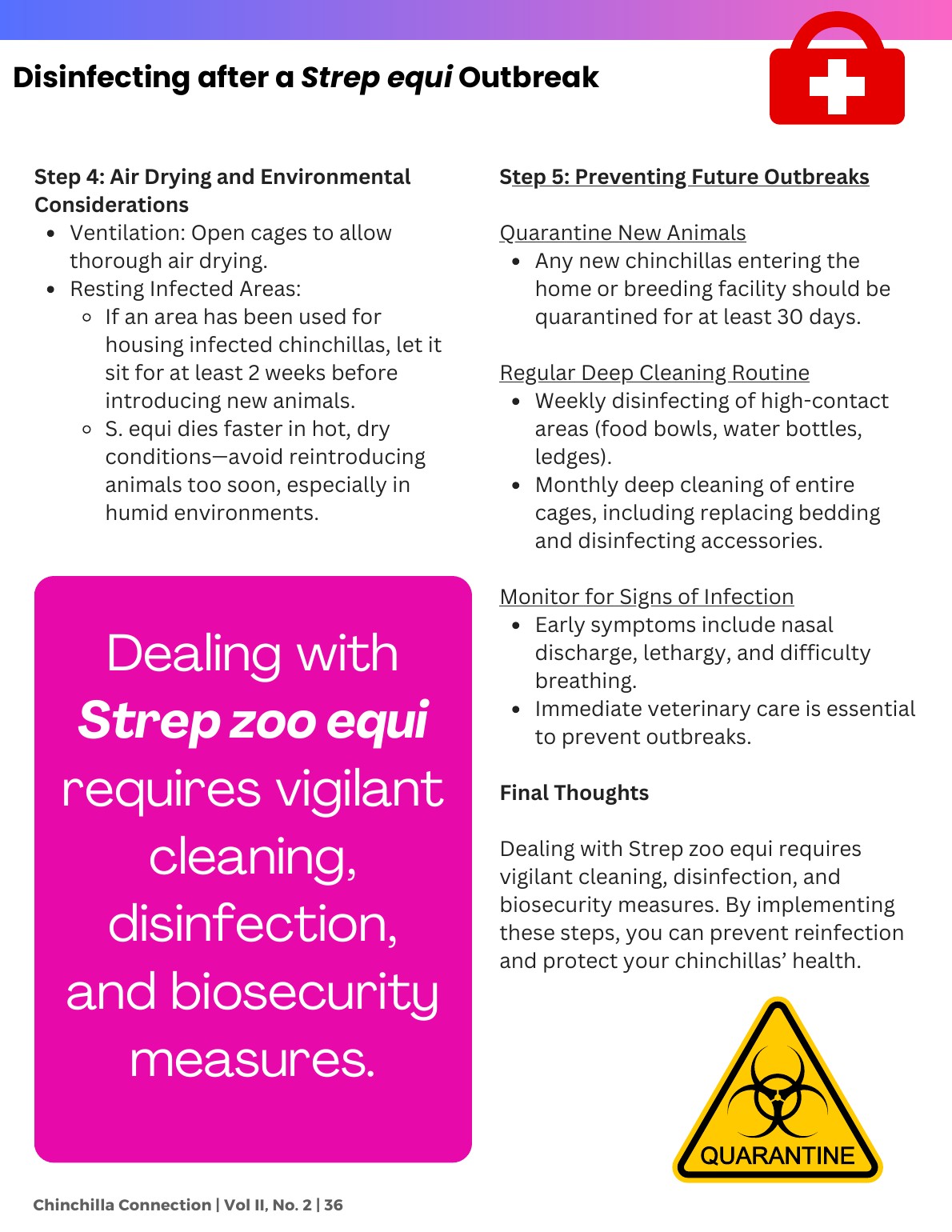
The complete three-page Health Hub article, “Case Study: Disinfecting after a Streptococcus equi Outbreak,” from the supplied January 31, 2025 file. The printed issue identifies itself as Volume 2, Issue 2.
Published by Global Chinchilla Alliance. Issue editorial credits: Shahna Thomas Powell, Editor-in-Chief; Tabitha Lindsay, Managing Editor. No individual article byline is printed on these pages.
Current reference guidance: EPA: creosote · ASPCA: cleaning and disinfection.
Membership helps connect education with action. Read the magazine, exchange knowledge and help advance GCA’s work for chinchillas.
Join GCAREAD THE EVIDENCE
A colony investigation with culture and PCR testing, including animals without visible signs. Its findings should not be generalized into a national prevalence estimate.
Read the open-access studyA clinical case report focused on a pet chinchilla. Publisher access may vary.
Read the case reportA primary investigation comparing human and equine isolates.
Read the CDC journal studyA review of canine disease and outbreaks. Useful context for mixed-species facilities, not a chinchilla prescribing guide.
Read the reviewABCD guidance on streptococcal infections and risks in cats.
Read the veterinary guidelineASPCA guidance for dogs and cats, plus CDC resources for veterinary infection prevention.
ASPCA guidance · CDC resources