A Global Chinchilla Alliance (GCA) initiative • Welfare. Education. Community.
Global Chinchilla AllianceGlobal Chinchilla Alliance
Chinchilla Rescue & Sanctuary
Menu

Our vision

Why we began, what we are building and how we can make it happen together.

A planned GCA program in Illinois. Fundraising is underway; the rescue & sanctuary is not yet open.

WHY WE ARE BUILDING THIS

A promise taking shape.

Long before there was a sanctuary proposal, there was a question that stayed with our founders: when hundreds of chinchillas need help at once, where can they go?

The Valley View and Moulton cases made that question impossible to ignore. They showed our founders why chinchillas need lasting, species-specific support: people who understand their care, places prepared to receive them, and a community that stays involved after the headlines fade.

2014 · VALLEY VIEW

Hundreds of lives. One urgent need.

San Diego Humane Society took in more than 400 chinchillas from Valley View. The scale of that response brought into focus the housing, veterinary care and placement work that a large chinchilla rescue demands.

Read the KPBS Public Media reporting
2021 · MOULTON

A lasting call for better care.

An administrative law judge permanently revoked the dealer license of Moulton Chinchilla Ranch’s owner following serious animal-welfare violations. For GCA’s future founders, the case reinforced the need for both prevention through education and a prepared response when animals need help.

Read the National Geographic investigation
2024 · GCA’S BEGINNING

An animal-first organization.

When we established Global Chinchilla Alliance in 2024, education, welfare and rescue were part of our purpose from the beginning. We have been working toward this vision by bringing together chinchilla experience, developing educational resources and building the relationships and plans a dedicated center will need.

NOW · THE R & R CASE

From “one day” to “let’s make this happen.”

The Ohio situation helped us realize there is no time like the present to move this project forward. It brought renewed urgency to a goal GCA has been working toward from the beginning: a dedicated rescue and sanctuary with specialized housing, veterinary support, experienced caregivers and a lasting commitment to chinchillas.

PART OF SOMETHING BIGGER

Rooted in Global Chinchilla Alliance.

Established in 2024, GCA brings together people who care about chinchillas through education, welfare advocacy and a shared commitment to better care. The rescue and sanctuary puts that mission into a physical place: a home for animals, a resource for owners and a center for learning.

This is a GCA program, with contributions handled through the organization. GCA is a 501(c)(3) nonprofit, EIN 99-2008449.

Meet GCA and learn about our mission

KNOW THEIR PAST. SHAPE THEIR FUTURE.

A precious history. A place in our families.

Domestic chinchillas are already part of our world. Their future depends on how well we care for them now.

01 · THE WILD POPULATIONS AND THE PELT TRADE

Understand the cost before following the journey.
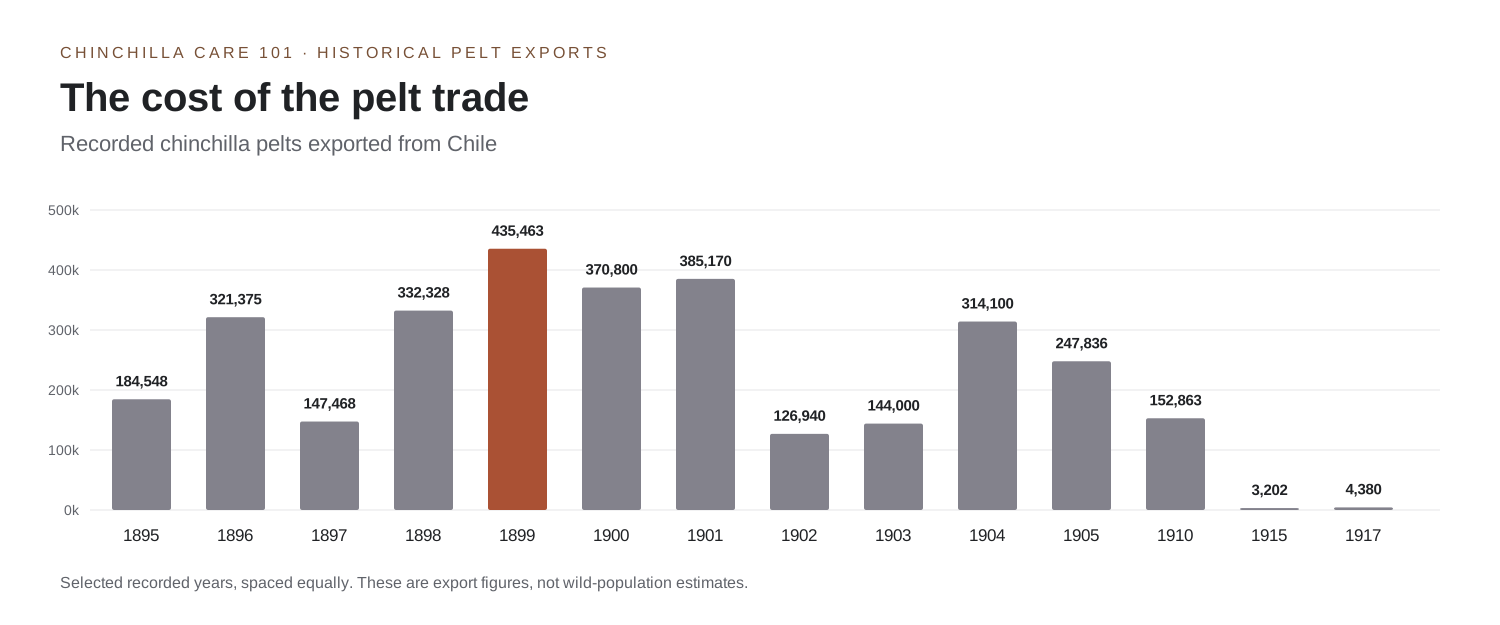
Commercial hunting for fur devastated wild chinchilla populations. These historical Chilean export figures, reproduced from Shahna Thomas Powell’s Chinchilla Care 101: The Ultimate Reference Guide, help show the scale of that trade. They are not wild-population counts or statistics about modern pet ownership.

Recorded Chilean chinchilla pelt exports, selected years 1895 to 1917

Historical context: CITES historical trade account.

02 · THE BEGINNINGS OF THE DOMESTIC CHINCHILLA

A separate chapter begins in human care.

The decline of wild populations and the development of domestic herds are connected histories, but they are not the same timeline. The milestones below follow the account in Chinchilla Care 101.

  1. 1913

    An early effort in Chile

    An attempt is made to establish a protected chinchilla colony.

  2. 1918

    Protection from trapping

    The book records Chile’s prohibition on trapping chinchillas for pelts.

  3. 1918–1921

    Assembling a founding group

    Mathias F. Chapman works to assemble a group of chinchillas in Chile.

  4. 1923

    Arrival in California

    Eleven chinchillas arrive in the United States with Chapman, helping establish the domestic fur-farming industry.

  5. 1934

    The herd continues

    Following Chapman’s death, his son Reginald takes over the herd.

  6. 1966

    Another generation of stewardship

    The book records the original herd’s transfer to the Ferreira family.

Adapted from Chinchilla Care 101: The Ultimate Reference Guide, Shahna Thomas Powell. Additional context: San Diego Zoo Wildlife Alliance.

03 · FROM PELTS TO FAMILY HOMES

The 1990s through the 2010s: a changing relationship.

As the U.S. chinchilla pelt market contracted, a growing pet community was taking shape. Reporting published by UPI in 2005 described U.S. pelt sales falling from 60,000 in 1989 to 6,000 in 2004, while citing a pet-industry estimate of 504,000 chinchillas in U.S. homes in 2004.

By the 2010s, the conversation increasingly included how to meet their needs as companions. Behaviour and welfare guidance addressed spacious housing, enrichment, companionship and the long-term responsibility of sharing a home with a chinchilla. This was a shift in how people valued and cared for them, not evidence that fur production had ended worldwide.

Sources: UPI, January 11, 2005 (historical reported estimates); Association of Pet Behaviour Counsellors, Chinchilla Factsheet.

2019 / 2023 · A CALIFORNIA MILESTONE

A change in the law, decades after domestication.

California enacted AB 44 in October 2019. Its restrictions on selling new fur products and manufacturing fur products for sale took effect January 1, 2023, with specified exceptions. This is a milestone in fur-product policy, not a blanket ban on every form of pelting and not the beginning of chinchilla domestication.

Read California’s AB 44

We cannot undo history, nor can we undo their domestication.We can give them the care they deserve and a future worth celebrating.

The domestic chinchilla’s story began with a difficult chapter in the fur trade. Today, these animals are cherished members of families who depend on us for their care and protection. We cannot change their beginnings, but we can take responsibility for what comes next: giving them the very best lives we can, now and for generations to come.

That responsibility is at the heart of GCA: preserve their history, celebrate their individuality, teach the care they need and build lasting support for those who need rescue or a home for life. Our rescue and sanctuary will turn that commitment into a place, a community and a future.

THE BUILDINGS ARE ALREADY HERE

An existing property. A new purpose.

All campus buildings are already in place: the sanctuary, museum and store building; rescue barn; veterinary and storage building; supply building; and caretaker home.

Our plan is to purchase the property and adapt these existing spaces for chinchilla care and public education. The work is interior preparation, equipment and supporting improvements, rather than construction of an entirely new campus.

THE GCA VISION

One campus. A lifetime of purpose.

Our proposal brings together lifelong sanctuary, emergency rescue, veterinary support, public education and chinchilla history. The sanctuary building exists for two purposes: giving domesticated chinchillas who have faced hardship a good rest of their lives, and helping people understand and care for them. It is not a zoo, aquarium or amusement attraction.

Building 1 · 9,000 square feet

The 60 × 150-foot building brings together sanctuary habitats, a museum, education space, a store and online-order fulfillment.

Building 3 · 2,520 square feet

The 42 × 60-foot rescue building has a planned capacity of up to 1,000 chinchillas for temporary quarantine, rehabilitation and preparation for vetted pet homes.

Building 4 · 1,800 square feet

The 30 × 60-foot veterinary and storage building provides space for onsite treatment, diagnostics, secure medicines and separate storage.

Everyday support

A dedicated supply building, onsite caretaker home and planned fenced garden support care, learning and daily operations.

CENTRAL ILLINOIS

A place for every part of the mission.
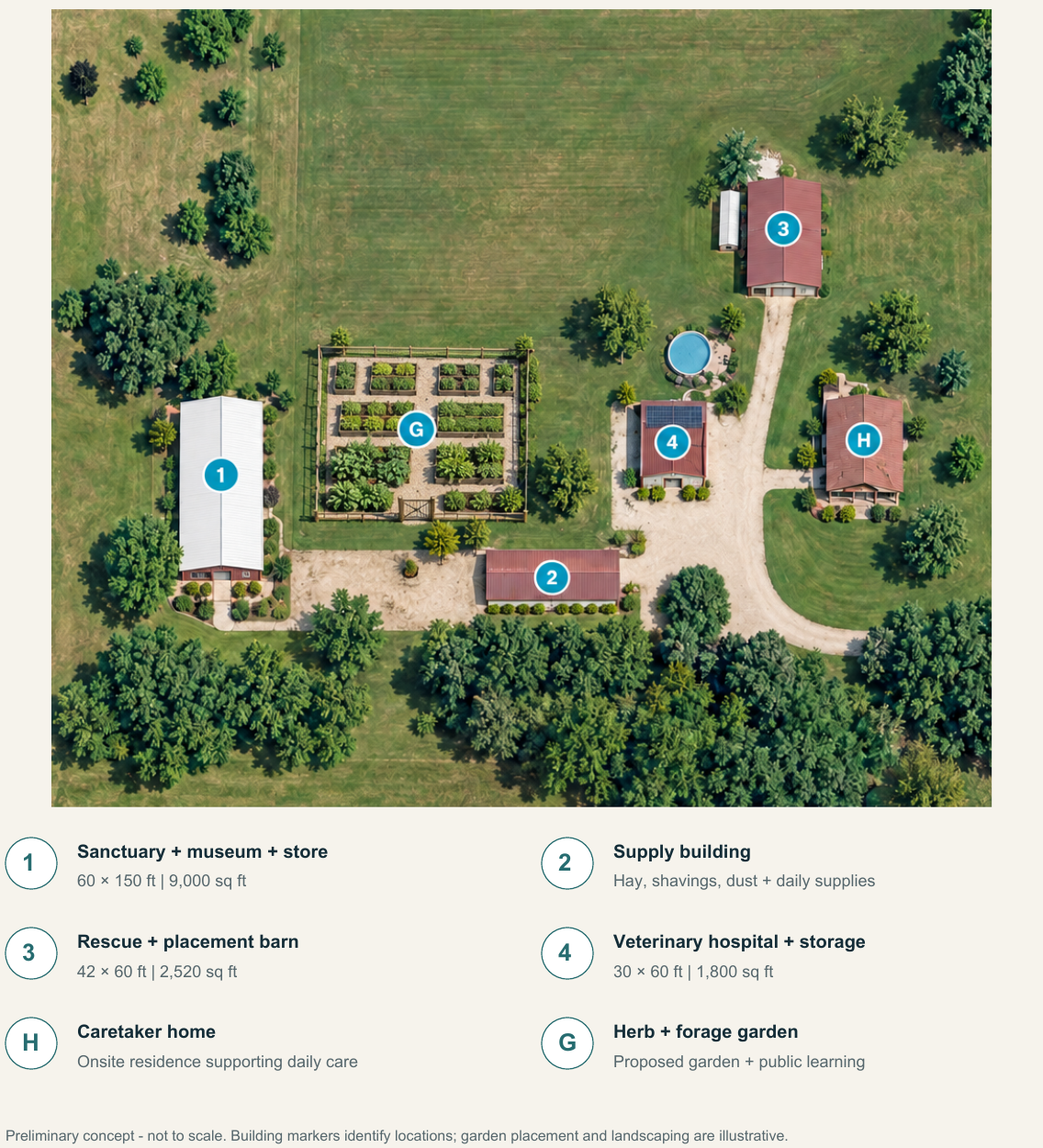
Proposed Central Illinois campus layout: 1 sanctuary, museum and store; 2 supply building; 3 rescue and placement barn; 4 veterinary hospital and storage; H caretaker home; G herb and forage garden
Proposed campus layout and building key. Concept only; not to scale.

Building 3: planned rescue capacity of up to 1,000 chinchillas.

THE GCA VISION

A home for chinchillas. A place for people to learn.
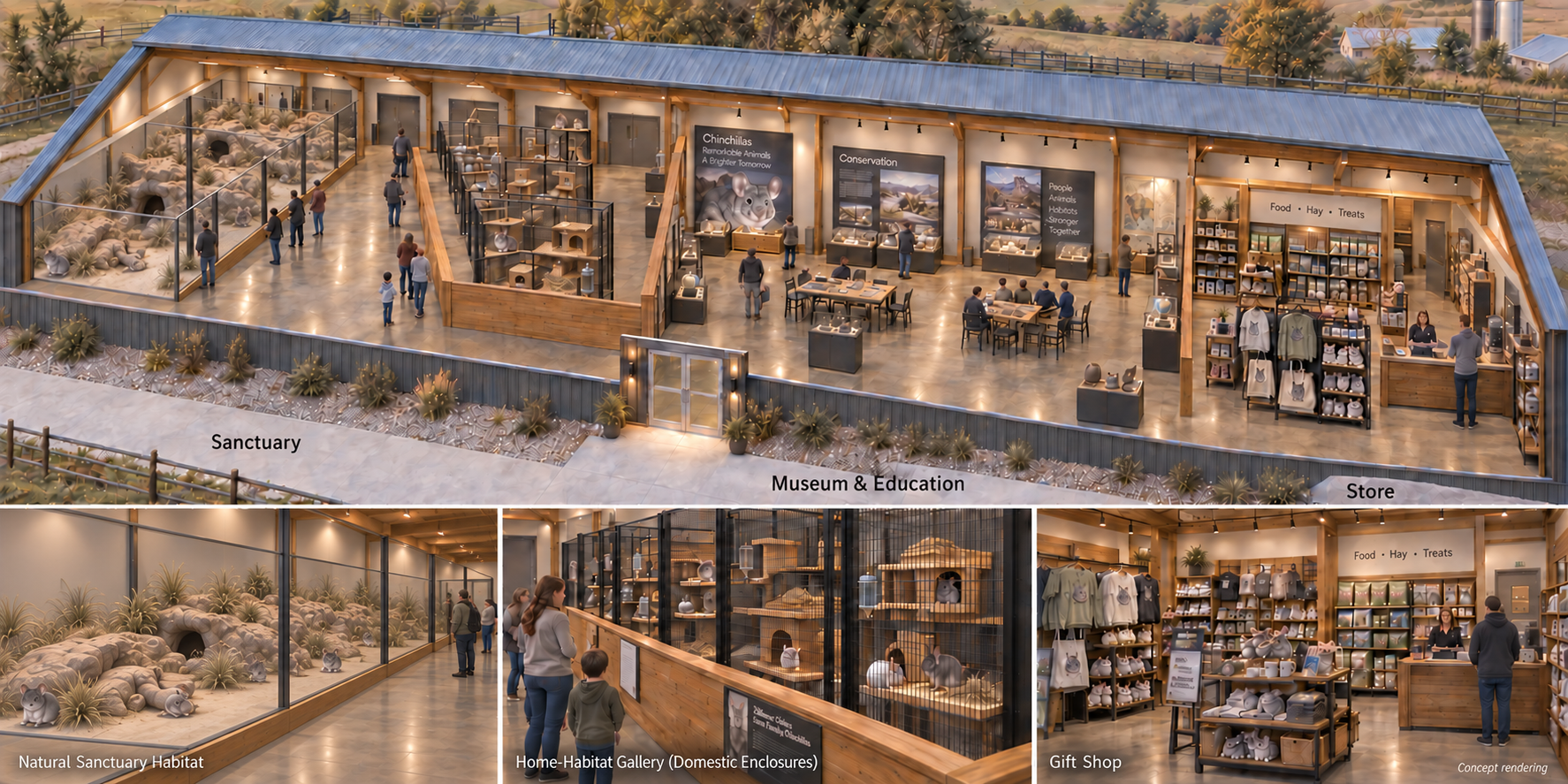
Full sanctuary, museum, home-habitat gallery and store concept
Concept rendering from GCA’s proposal. Proposed spaces, not a completed facility.

Lifetime sanctuary habitats

Separate male and female habitats begin at floor level, with climbing structures, hiding places and accessible cleaning routes. Glass viewing above solid lower walls allows observation while providing privacy and retreat.

Home-habitat gallery

Large furnished metal enclosures with wooden houses and shelves demonstrate thoughtful home environments. A visitor barrier keeps hands away from enclosures while educational displays explore colors, fur types and individual needs.

Museum and education

Historical records, exhibits and a teaching area will connect chinchilla history with responsible care. Education will serve the animals’ welfare. Residents will never be expected to perform or remain on display; their privacy, rest and freedom to retreat will come first.

Store and online fulfillment

A compact shop will offer small-pet supplies, food, hay, treats, apparel and keepsakes. Online-order fulfillment will help support ongoing operations alongside public visits, donations and sponsorships.

THE GCA VISION

Rescue today. Readiness for tomorrow.

The separate rescue barn is intended for animals undergoing quarantine, veterinary care and rehabilitation while waiting for suitable homes. It will remain a resource for future emergencies and other rescue needs, distinct from the sanctuary’s lifelong residents.

We also plan to support smaller 501(c)(3) chinchilla rescues when they reach capacity. As space and care resources allow, GCA will accept transfers, including chinchillas those organizations have been unable to rehome. Each animal will be considered for a suitable pet home or lifelong sanctuary based on its needs. By providing another path for these animals, we can help local rescues keep their doors open and continue serving their communities.

Planned improvements include insulation, heating and cooling, ventilation, cage water lines and cleaning equipment. Organized housing, animal identification and care records will support daily work and placement decisions.

Explore the rescue program

THE GCA VISION

Veterinary care close to home.

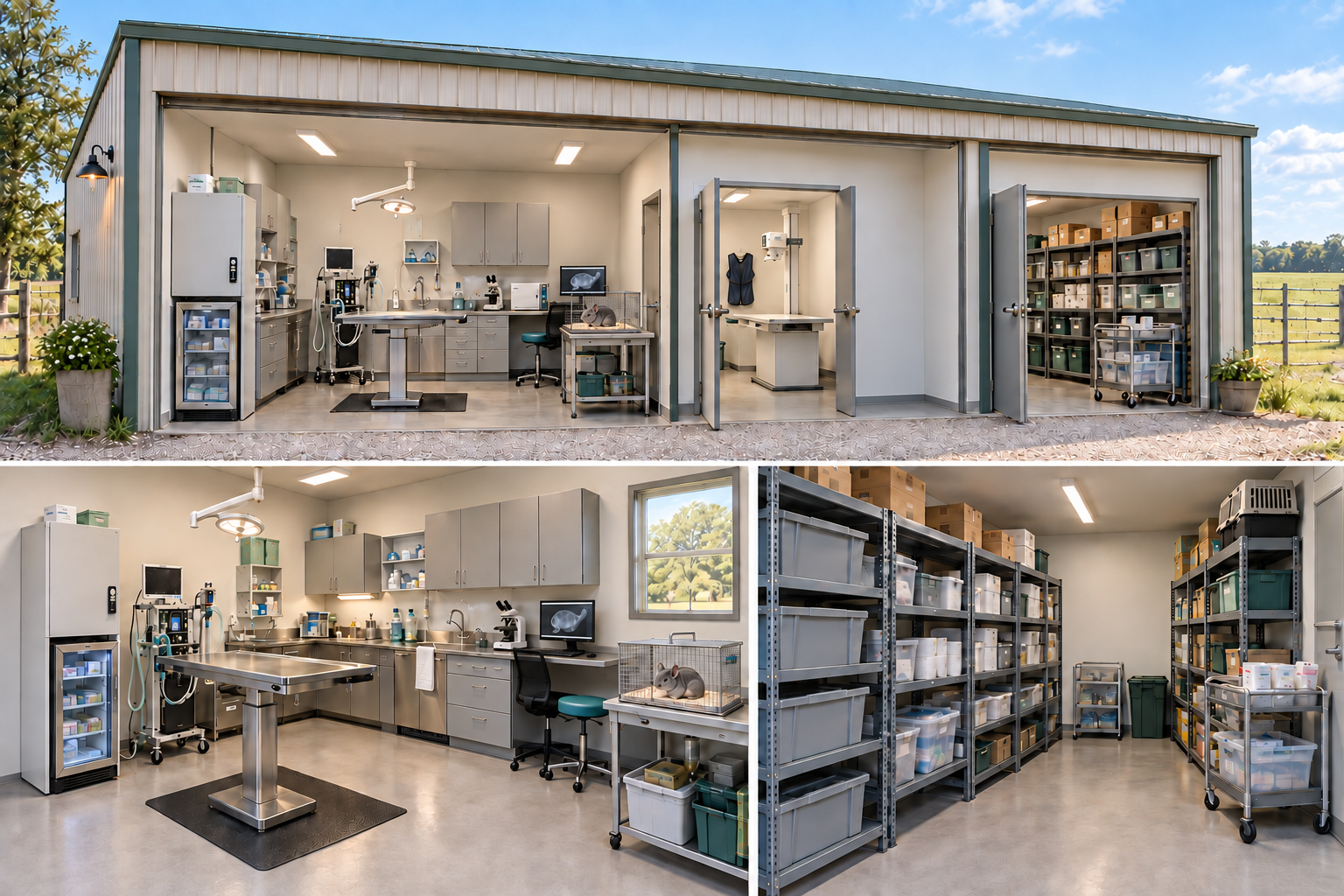
Proposed onsite veterinary treatment, imaging and separate storage areas
Concept rendering from GCA’s proposal. Proposed spaces, not a completed facility.

The proposed hospital includes examination and treatment space, diagnostic equipment, digital imaging, secure medication storage and a separate storage area. Rescue care would begin through veterinary arrangements before the permanent hospital is complete.

GCA plans to seek collaboration with the University of Illinois veterinary teaching hospital in Urbana for chinchilla health, veterinary education and disease prevention, including issues relevant to animal and human health. A partnership has not yet been confirmed.

THE GCA VISION

Learning beyond the buildings.

Fenced herb and forage garden

The planned fenced garden will grow plants found in chinchillas’ natural habitat, alongside other suitable herbs and forage that can be dried to complement their daily fortified feed and hay. Plant selection and feeding will be guided by veterinary advice.

A connected community

The campus will serve as a home base for volunteers, owners, adopters and veterinary connections, with educational resources shared through GCA’s wider network.

Follow their lives

Future care updates, photographs and resident stories will let supporters follow the animals whose lives they help improve.

A lasting operating model

Our plan combines store and online sales, public visits and education, modest rehoming fees, volunteers, recurring donations and sponsorships.

BUILD THE FUTURE IN STEPS

See what your support can make possible.

Our first priority is securing the property and equipping Building 3 for rescue care. Sanctuary, museum and store buildout follows as Priority 2. The onsite veterinary hospital is a future project that can develop as support grows.

First: secure the property and prepare for rescues.

PRIORITY 1 · PROPERTY & RESCUE

Property + rescue building

$640,000combined funding goal

Property purchase $575,000 · Building 3 rescue cages $30,000 · Building 3 insulation and HVAC $35,000. An anonymous donor has already provided $20,000 in earnest money toward the property purchase.

$20,000 earnest money paid$620,000 remaining

The $20,000 earnest-money deposit counts toward the property purchase, not animal-care cash. The $65,000 for Building 3 covers cages, insulation and HVAC. Closing costs and operating expenses are additional.

PRIORITY 2 · BUILDING 1

Sanctuary buildout

$75,000base project estimate

Transform the existing 60 × 150-foot building into lifetime habitats, public learning spaces and a store supporting the mission.

$0 confirmed funding shown$75,000 remaining

Concrete finishing, staining and sealing $45,000 · sanctuary and museum setup $25,000 · store fixtures and setup $5,000.

Promising conversations. More ways to help.

GCA is pursuing promising opportunities for larger corporate support and private donations. These discussions could help move the project forward, but no unconfirmed support is counted in the progress bars.

Priority 1 establishes the home base and equips Building 3 for rescue care. Intake will also require supplies, veterinary support, staffing, operating resources and approvals. Sanctuary buildout follows as Priority 2.

FUTURE PROJECTS

Looking ahead: onsite veterinary care.

BUILDING 4 · FUTURE PHASE

Veterinary hospital & storage

$102,500base project estimate

Adapt the existing 30 × 60-foot building for veterinary treatment, diagnostics, secure medicines and separate storage.

$0 confirmed funding shown$102,500 remaining

Concrete $20,000 · HVAC $7,500 · veterinary equipment $25,000 · digital X-ray and installation allowance $50,000.

Updated daily.

Beware of scams. When you click our donation link, make sure you arrive at globalchinchillas.com/product/donate/. Check that globalchinchillas is spelled exactly as shown.

THE GCA VISION

Build carefully. Open with purpose.

The proposal outlines approximately one year of phased development once funding and approvals support the work. Animal-care readiness comes first; public spaces follow.

  1. Prepare for careInsulate and equip the rescue building, arrange veterinary support and prepare for authorized intakes.
  2. Months 2–5Complete designs and permitting for the sanctuary and supporting spaces.
  3. Months 5–9Build out the sanctuary, museum and store, with the veterinary hospital extending through month 9.
  4. Months 8–12Install the garden, commission the facilities and prepare for a public opening.

Fundraising will support acquisition, buildout and the first two years of operations while recurring support and earned income develop. Opening dates will follow confirmed progress.

A COMMUNITY EFFORT

Help make this possible.

Support the project through Global Chinchilla Alliance, share your skills or introduce us to others who can help.

Ways to help