2025 · VOLUME 2, ISSUE 2 · PAGES 34–36
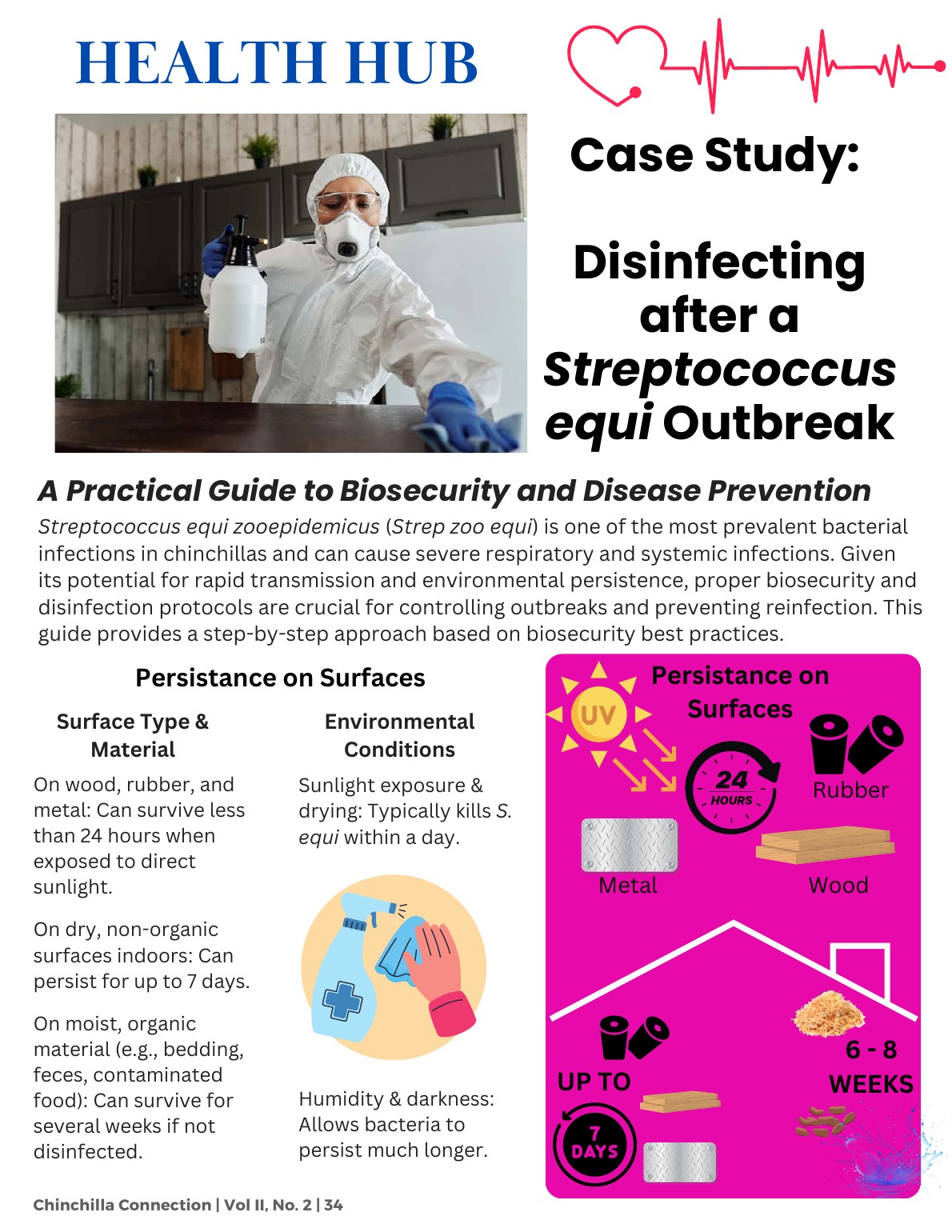
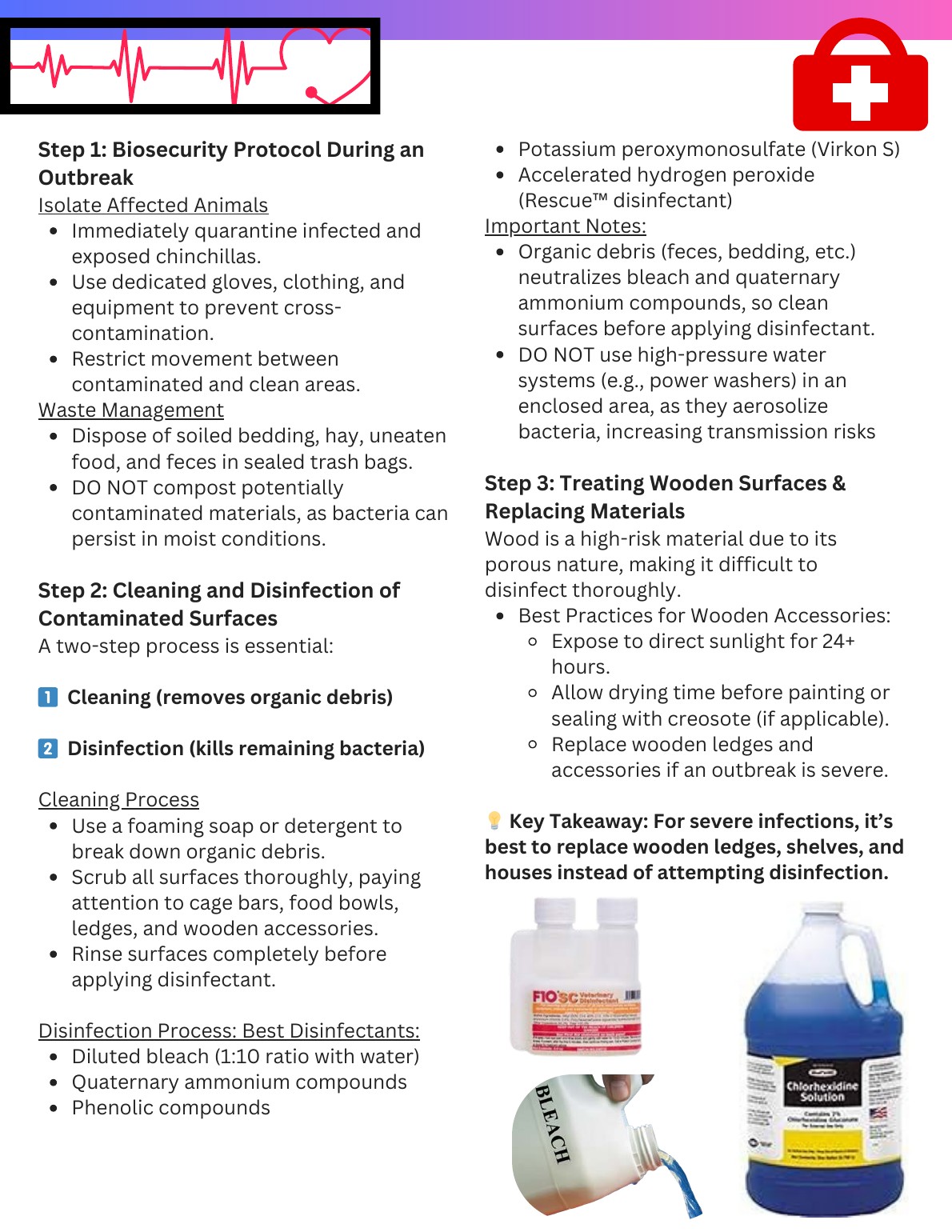
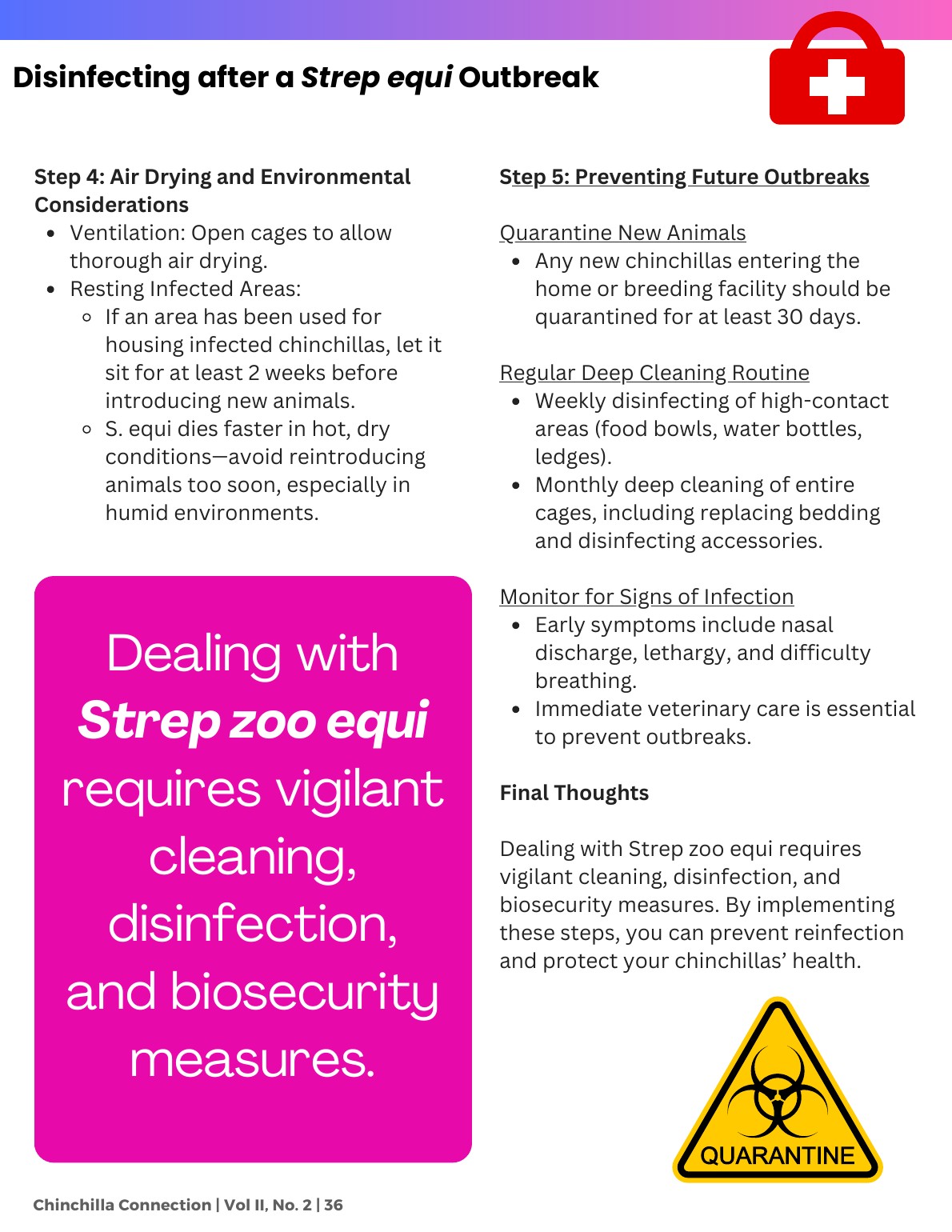
Disinfecting after an outbreak.
The complete three-page Health Hub article, “Case Study: Disinfecting after a Streptococcus equi Outbreak,” from the supplied January 31, 2025 file. The printed issue identifies itself as Volume 2, Issue 2.
Published by Global Chinchilla Alliance. Issue editorial credits: Shahna Thomas Powell, Editor-in-Chief; Tabitha Lindsay, Managing Editor. No individual article byline is printed on these pages.
Important corrections before using this archived guide
- Do not use creosote on chinchilla enclosures, shelves or chewable accessories. The recommendation on page 35 should not be followed. Replace contaminated porous items when they cannot be safely disinfected.
- The article uses S. equi terminology broadly. Do not assume its surface-survival times apply to S. zooepidemicus under every condition. Sunlight or a two-week vacancy is not proof an enclosure is safe.
- Choose an animal-appropriate disinfectant with your veterinarian. Follow its current label for dilution, wet contact time, rinsing, drying and safe animal re-entry. Do not mix cleaning chemicals or treat the article’s product list and bleach ratio as universal instructions.
- The 30-day quarantine in this archive is not a clearance standard for suspected Strep zoo. Use a veterinarian-directed plan based on exposure, testing and clinical findings.
Current reference guidance: EPA: creosote · ASPCA: cleaning and disinfection.
Be part of the next conversation.
Membership helps connect education with action. Read the magazine, exchange knowledge and help advance GCA’s work for chinchillas.
Join GCA